Weekly Huddles Turn Chaos Into Assignments
- Dustin Bush
- Jun 27
- 3 min read

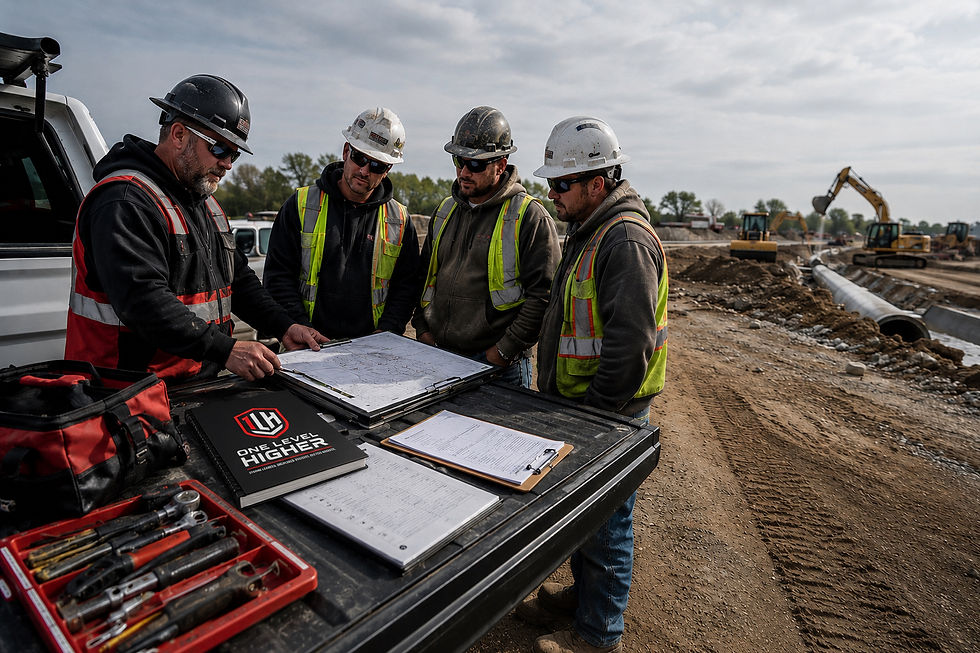
The Problem: Too Many Moving Pieces, Not Enough Ownership
Civil construction gets messy fast.
One crew is waiting on layout. Another is trying to finish concrete. A utility conflict is holding up a crossing. A grading crew is bouncing between areas. The project manager is chasing direction. The superintendent is trying to keep people productive. The owner or GC wants dates. The foremen want to know what they are actually supposed to do next.
By Friday, everybody feels busy.
But busy is not the same as controlled.
A lot of field chaos does not come from laziness. It comes from unclear ownership. Everyone knows there are problems, but nobody has turned those problems into clean assignments.
That is where a weekly huddle matters.
Not a long meeting. Not a complaint session. Not a whiteboard full of vague goals.
A useful weekly huddle answers four questions:
Who owns it?
What is the goal?
What date matters?
What can stop production?
If the meeting does not answer those questions, it probably did not control the work.
The Practical Lesson
When a project has too many moving pieces, the superintendent’s job is to turn chaos into assignments.
That means every active work area needs a clear owner, a near-term goal, a date, and a constraint list.
A superintendent does not need a perfect plan for the next six months to control the next week. But he does need enough structure to stop the same issues from being rediscovered every morning.
Field leadership is not just knowing what is happening. It is making sure the right people know what they own.
Field Example
Picture a civil project with six active areas.
One area needs final grading. Another needs concrete. Another is waiting on a utility issue. One zone has partial access. Another needs survey. Another is being affected by work performed by others.
The superintendent knows all of this in his head. The project manager knows pieces of it. The foremen each know their own work. The owner or GC is asking for progress. Everyone is talking, but the work still feels scattered.
The fix is not another long meeting.
The fix is a simple weekly huddle sheet.
For each area, write down:
Area or Phase
Crew or foreman
Planned work
Weekly goal
Target date
Constraint
Decision needed
Owner of follow-up
Status
Now the project has a working control sheet.
Not a corporate report. Not a polished schedule. A field-useful sheet that tells everyone what matters this week.
What Leaders Usually Get Wrong
Leaders often assume that because something was said out loud, it was assigned.
That is a mistake.
Verbal planning disappears fast in the field. People get pulled into phone calls. Crews move. Material shows up late. Survey gets delayed. Equipment breaks. Another foreman asks for help. By lunch, the morning conversation is already fading.
Another mistake is letting the huddle become a status update instead of a decision meeting.
There is a difference.
A status update says:
“We are working on Segment 2.”
A useful huddle says:
“Segment 2 Zone 4 is owned by Mike. Goal is final grade by Thursday. Blocker is missing layout at the north end. Terry owns survey follow-up by Tuesday morning.”
That is a real assignment.
What To Do Instead
Run the huddle around work fronts, not personalities.
Start with each active area and ask:
What are we trying to finish this week?
Who owns it?
What has to happen first?
What could stop it?
What decision do we need?
Who is chasing that decision?
What date are we managing to?
Keep the format simple enough that a superintendent or foreman would actually use it.
Do not build a perfect form that nobody fills out. Build a practical form that makes the next week clearer.
Simple Action Checklist
Use this checklist before your next weekly field huddle:
List every active work area.
Assign one owner to each area.
Write the weekly goal for each area.
Add one target date.
Identify the top constraint.
Assign one person to remove or chase that constraint.
Mark whether the area is ready, blocked, partial, or complete.
Review old constraints before adding new ones.
End the meeting with assignments, not general discussion.
Closing Takeaway
The point of a weekly huddle is not to talk about the job.
The point is to control the job.
If the project feels chaotic, do not start by asking for a bigger schedule or another meeting. Start by turning the moving pieces into written assignments.
A good superintendent does not just know the chaos.
He converts it.
Final Action Checklist
Create a weekly huddle sheet.
Break the job into active work areas.
Assign owner, goal, date, blocker, and follow-up.
Keep it short enough to use every week.
Review it before the next huddle.


Comments